
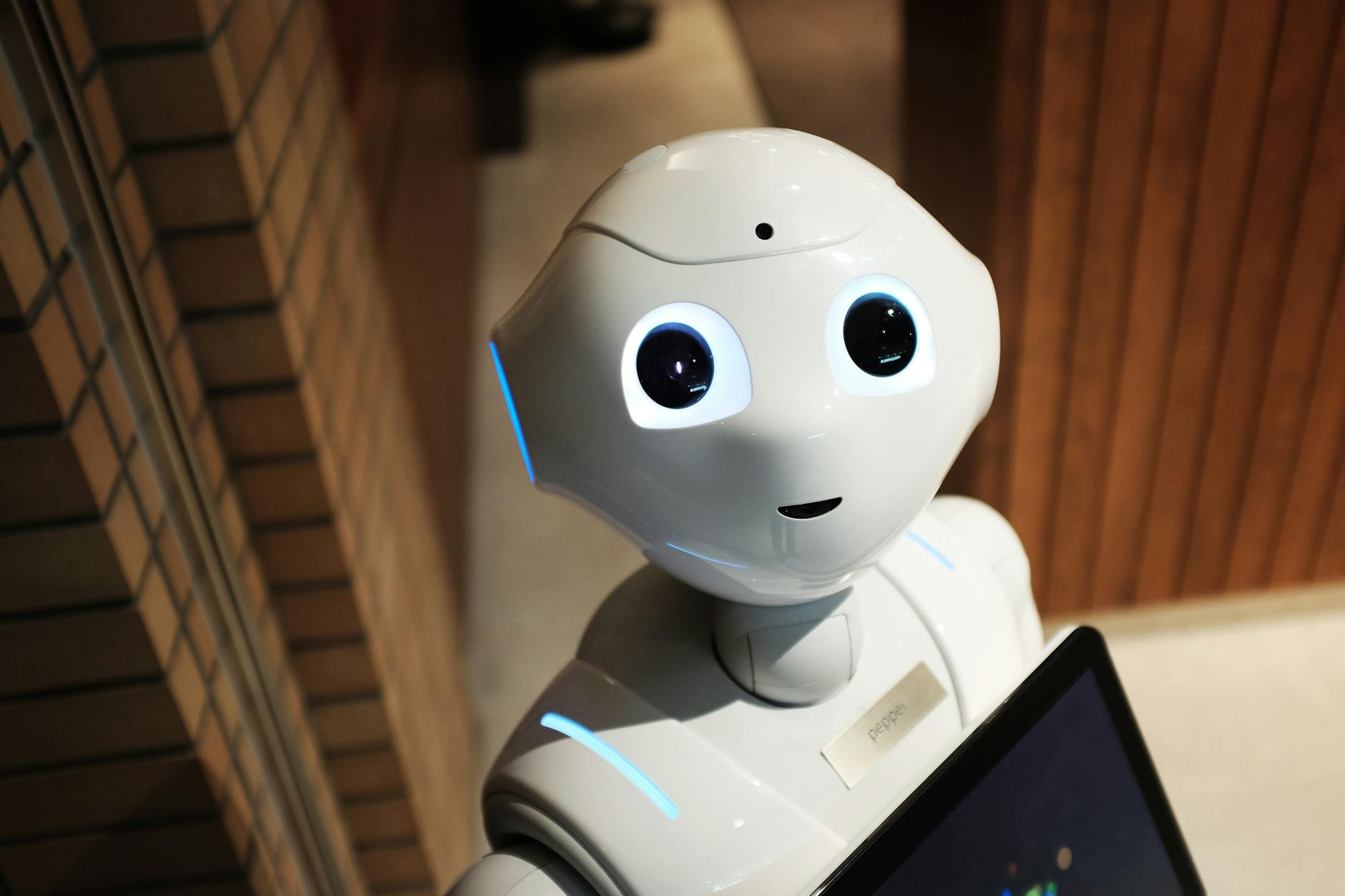
Artificial Intelligence has been topical over the past few years. Its introduction to the world has triggered a lot of innovations, which big tech giants have invested heavily in. AI promises a future of great possibilities, defining new ways we interact with technology. Given the new future, most people fear its impact on labour, some say it will cause more layoffs as AI can replace people on their jobs. In as much AI is a great technology among us, it is very important to be aware of how business leaders and HR practitioners view the technology when it comes to employee productivity. Their view on how to make effective use of it is important as AI is here to stay.
According to H James Wilson and Paul R., Daugherty, for people to excel in an AI Human collaboration people need to have one or more of “Fusion Skills”. These are Intelligent interrogation, judgment integration and reciprocal apprenticing. As success of each one of us is hinged on our ability to elicit the best possible output from Large Language Models. This supports the notion that AI will not cause layoffs at a large scale but rather be infused into the work we already do.
The following 3 paragraphs are an exert replica of an HBR article by H James Wilson and Paul R. Daugherty, they perfectly described the three Fusion Skills.
🧠Intelligent interrogation
Intelligent interrogation involves prompting LLMs (or in lay terms, giving them instructions) in ways that will produce measurably better reasoning and outcomes. Put simply, it’s the skill of thinking with AI. For example, a customer service rep at a financial services company might use it when looking for the answer to a complicated customer inquiry; a pharmaceutical scientist, to investigate drug compounds and molecular interactions; or a marketer, to mine datasets to find optimal retail pricing.
🧑🏾⚖️Judgment integration
Judgment integration is about bringing in your human discernment when a gen AI model is uncertain about what to do or lacks the necessary business or ethical context in its reasoning. The idea is to make the results of human-machine interactions more trustworthy. Judgment integration requires sensing where, when, and how to step in, and its effectiveness is measured by the reliability, accuracy, and explainability of the AI’s output.
🧑🏾🎓Reciprocal apprenticing
With reciprocal apprenticing, you help AI learn about your business tasks and needs by incorporating rich data and organizational knowledge into the prompts you give it, thereby training it to be your co-creator. It’s the skill of tailoring gen AI to your company’s specific business context so that it can achieve the outcomes you want. As you do that, you learn how to train the AI to tackle more sophisticated challenges. Once a capability that only data scientists and analytics experts building data models needed, reciprocal apprenticing has become increasingly crucial in nontechnical roles.
To answer the question will AI cause layoffs? In my thinking, it will not necessarily, however, it will amplify the work we do. Just like most new technologies, they are meant to help us do more. AI is similar instead of layoffs it will help us achieve more with less effort. accelerating our productivity over time as we would have infused AI into our workflow. The challenge is how best can we learn AI skills – Fusion Skills, that will help us in this new future.
 Tkc Notes