
“This has to be a book for every leader out there, It spotlights a fundamental way of great leadership for both individuals and corporate.” If you were ever faced with the question of “Why do other leaders and organisations inspire us whilst some do not?” you would know trying to get to the root difference can be difficult.
An iPhone, a Macbook, and an iPad are products in the market with a dozen other companies offering the same solutions, in some cases even better yet you find hardcore loyal customers to Apple. In some cases, a Samsung or a Google phone proves to be a better phone than iPhone yet someone sane would still invest in an iPhone. The case is similar when it comes to laptops a Dell laptop proves to be a better gadget compared to the Macbook yet someone still invests in the Macbook.
Similarly, some leaders inspire us more than others. With one leader we just get them then with others it’s different they are just there to manage yet uninspiring. The difference in all this is in the way they communicate. In the case of Apple it is the way they communicate, in the case of inspiring leaders as well it is the way they communicate.
🟡This introduces us to Simon Sinek’s Golden Circle
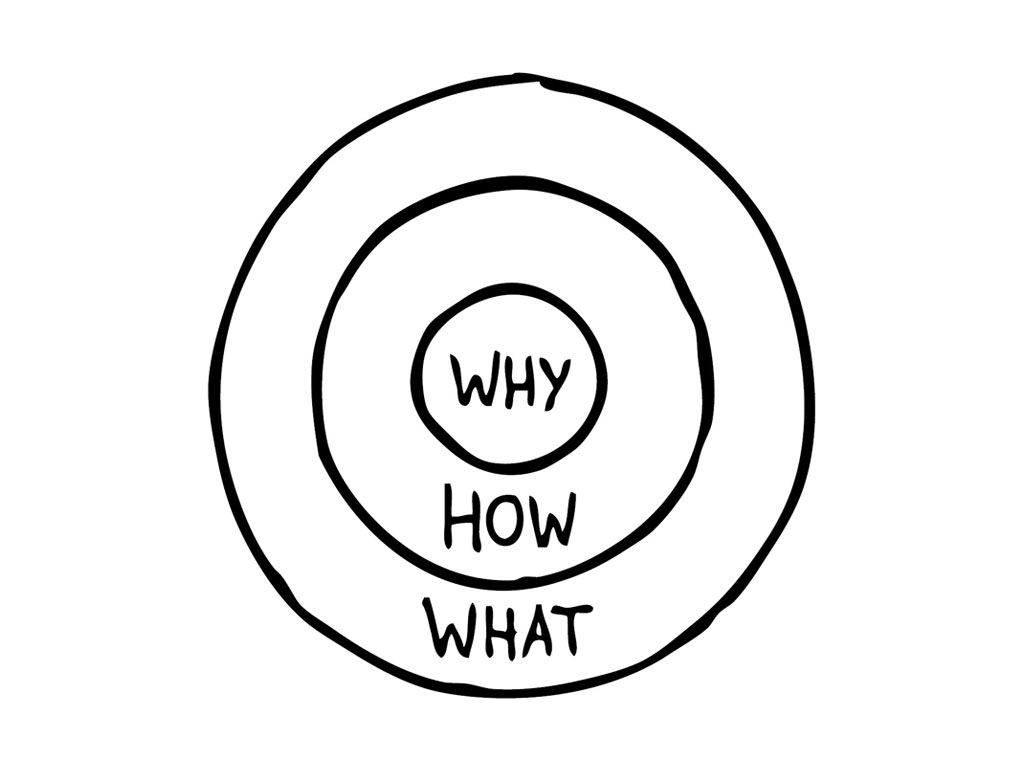
Absent inspiration you have manipulation. There are a few leaders who choose to inspire rather than manipulate in order to motivate people. Whether individuals or organisations every single one of these inspiring leaders think, act and communicate exactly the same way. As depicted by the Golden Circle they all start with why when communicating.
The Golden Circle is an alternative perspective to existing assumptions about why some leaders and organisations have achieved such a disproportionate degree of influence.
⭕WHAT
Every single company and organisation know what they do. WHATs are easy to define the products and services a company sells or the job function one has within the system.
⭕HOW
This is how companies do what they do some call them differentiating value proposition, or proprietary process or unique selling proposition… Usually, HOWs are used to explain how something is better some companies know how they do What they do
⭕WHY
The purpose, cause or belief behind what they do. Why does the company exist, why do you get out of bed every morning? And why should anyone care? Very few companies or leaders can articulate WHY they do WHAT they do.
When most organisations think, act and communicate they do so from the outside in, from WHAT to WHY, from the clearest thing to the fuzziest thing. We say WHAT we do, we sometimes say HOW we do it, but we rarely say WHY we do WHAT we do. Not the inspiring companies and leaders, they all think, act and communicate from the inside out from WHY to WHAT.
This gives companies and leaders a challenge to define their WHY clearly to clearly articulate it and share it with the world. Because people do not buy what you do they buy why you do it. If your why is so clear people who share a similar belief will be drawn to it. Knowing your why is not the only way to be successful, but it is the only way to maintain lasting success and have a greater blend of innovation and flexibility.
🧠The biology behind.
The power of why is not opinion, it’s biology. The Golden Circle corresponds with three major levels of the brain.
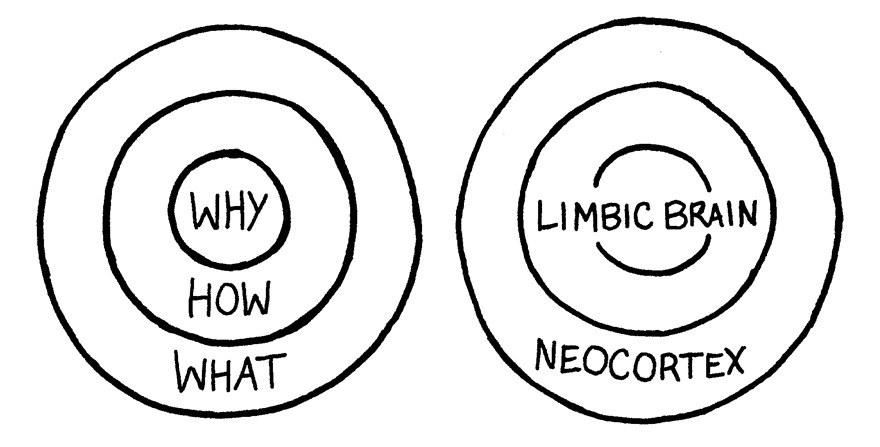
The neocortex corresponds with WHAT level, It’s responsible for rational and analytical thought and language. The two middle sections are the Limbic brain it’s responsible for feelings i.e trust, loyalty, responsible for human behaviour and decision making but, has no capacity for language.
When we communicate from outside in, people understand complicated information like facts and features but it does not drive behaviour. When we communicate from the inside out we are talking directly to the part of the brain that controls decision-making.
The part of the brain that controls our feelings has no capacity for language, which is why it is difficult to explain why we married the person you married. We struggle to put into words why we love them. “Gut decisions /Gut feeling” comes from the Limbic brain. That is why it is so difficult to explain them. Our Limbic brain is so powerful that it can drive behaviour that sometimes contradicts our rational and analytical behaviour. The Gut feeling just feels right. Absent a WHY, a decision is harder to make and when in doubt we look to science, to data, to guide decisions.
🐑Leaders Need a following.
“Happy employees ensure happy customers and happy customers ensure happy shareholders” Herb Kelleher. Trust begins to emerge when are have a sense that another person or organisation is driven by things other than their own self-gain.
Cultures are groups of people who come together around a common set of values and beliefs. Those who don’t share the same values are just bad fits. Now consider what a company is, it is a culture. A group of people brought together around a common set of values and beliefs. It’s not products and services that bind a company together. It’s not size and might, it’s the culture the strong sense of beliefs and values that everyone from the CEO to the receptionist all share. So the logic follows, the goal is not to hire people for the skill set you need, the goal is to hire people who believe what you believe. When employees belong, they will guarantee your success. And they won’t be working hard and looking for innovative solutions for you, they will be doing it for themselves. What all great leaders have in common is the ability to find good fits to go in their organisations – those who believe what they believe. The goal is to hire those who are passionate about your why, your purpose, cause or belief and who have the attitude that fits your culture.
When a team of experts come together they offer work for themselves and not for the good of the whole. The role of a leader is not to come up with all the great ideas. The role of a leader is to create an environment in which great ideas can happen. Therefore, great leadership is not about flexing and intimidation, great leaders lead with why, and they embody a sense of purpose that inspires those around them
🎯How a Tipping Point Tips
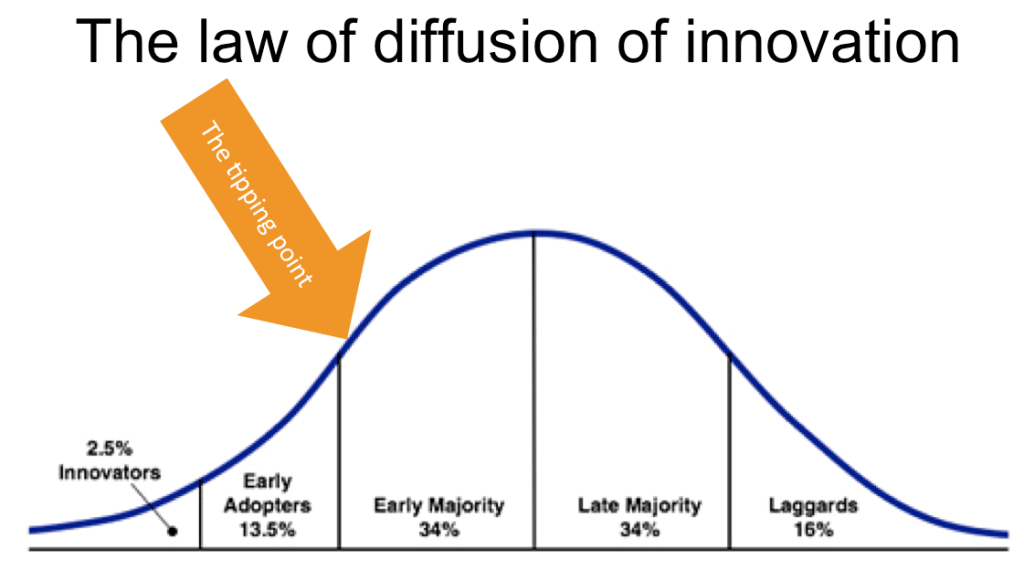
Innovators pursue new products or ideas aggressively and are intrigued by any fundamental advance. Being first is a fundamental part of their lives. Early adopters are similar to innovators in that they appreciate the advantages of new ideas or technologies. They both rely heavily on intuition they trust their gut. The early and late majority are more practical-minded, rational factors matter more. The early majority is slightly more comfortable with new ideas or technologies while the late majority is not.
As a business leader the farther right you go on the curve, the more you will encounter the clients and customers who may need what you have but don’t necessarily believe what you believe. The goal is to find those at the left the ones who just get you, they believe in your cause. It’s not too hard to recognise where people fall on the spectrum once you are in a relationship with them. the opportunity is to figure out which is which before you decide to work with them.
The best does not always win, the law of diffusion must be considered if mass market acceptance is important to you. It’s nearly impossible to achieve mass market acceptance if you point your marketing and resources to the middle of the bell if you aim to woo those in the middle without first appealing to the early adopters. According to Rogers, it’s because the early majority will not try something until someone else has tried it first. The goal of business should not be to simply sell to anyone who wants what you have – the majority – but rather to find people who believe what you believe those at the left side of the bell curve.
It is those who share your values and beliefs, not the quality of your products that will cause the system to tip. Your role in the process is to be crystal clear about what purpose, cause or belief you exist to champion and to show how your products and services help advance that cause.
🍃How to rally those who Believe.
Start with why, but know how. Surely energy motivates but charisma inspires. Energy is so easy to see, easy to measure and easy to copy. Charisma on the other is hard to define, nearly impossible to measure and too elusive to copy. All great leaders have charisma because all great leaders have clarity of WHY and an undying belief in a purpose or cause bigger than themselves. Energy can excite, but only charisma can inspire. Charisma commands loyalty and energy does not.
As such those who know WHY need those who know HOW. The pessimists are usually right, to paraphrase Thomas Friedman author of The World is Flat, but it’s the optimists who change the world. Why -types are the visionaries, the ones with overactive imaginations. How- types are the realists and have a clearer sense of all things practical they live more in the here and now. One is not better than the other, they are just different ways people naturally see and experience the world.
Walt Disney was a WHY-type his brother Roy helped him a HOW-type. Most people in the world are HOW-types. Although so many of them fancy themselves visionaries, in reality, most successful entrepreneurs are HOW-types. A business is a structure, systems and processes that need to be assembled it is the HOW-types who are more adept at building those processes and systems. To reach a billion-dollar status, to alter the cause of an industry requires a very special and rare partnership between one who knows Why and those who know How. Bill Gates had Paul Allen, Herb Kelleher had Rollin King and Steve Jobs had Steve Wozniak. This relationship clarifies the difference between a vision statement and a mission statement of an organisation.
The vision is the public statement of the founder’s intent and why the company exists.
The mission statement is a description of the route, the guiding principles How the company intends to create that future.
🧪The Celery Test.
To improve How and What we do, we constantly look at what others are doing. But this is a flawed assumption that what works for one organisation will work for another. The idea that coping what or how things are done at high-performing organisations will inherently work for you is just not true. “Best practices are not always best.” It is not just WHAT and How you do things that matters, what matters more is that WHAT & How you do things is consistent with your way, only then can your practices indeed be best. There is nothing wrong with looking to others to learn what they do, the challenge is knowing what practices or advice to follow.
That is where the Celery Test comes into play.
Celery Test.
Imagine you go to a dinner party and somebody comes up to you and says, “You know what you need in your organization? M&M’s. If you’re not using M&M’s in your business, you’re leaving money on the table. Somebody else comes up to you and says, “You know what you need? Rice milk. The data shows that all the people are buying rice milk these days. You should be selling rice milk in this economy.” While you’re standing over the punch bowl, yet another person offers some sage advice. “Oreo cookies,” he says. “We made millions; from implementing Oreo cookies in our organization. You’ve got to do it.” Still, somebody else comes up to you and says, “Celery. You’ve got to get into celery.” You get all this great advice from all these highly accomplished people. Some of them are in the same industry. Some of them are more successful than you. Some of them have offered similar advice to others with great success. Now, what do you do? You go to the supermarket and you buy celery, rice milk, Oreos and M&M’s. You spend a lot of time at the supermarket walking the aisles. You spend a lot of money because you buy everything. But you may or may not get any value from some or all of these products; there are no guarantees. Worse, if you’re budget.
Starting with why not only helps you know which is the right advice for you to follow, but also to know which decision will put you out of balance. With a clear why, anyone within the organisation can make a decision as clearly and as accurately as the founder. A WHY provides the clear filter for decision -making.
📈The Biggest Challenge is Success.
Over time successful business owners know what they do, they know how to to do it, but for many of them no longer know WHY. So, achievement is something you reach or attain like a goal. Success in contrast is a feeling or a state of being. Achievement comes when you pursue and attain WHAT you want. Success comes when you are in clear pursuit of WHY you want it. Success comes when we wake up everyday in that never-ending pursuit of WHY we do WHAT we do. Our achievements, WHAT we do serve as the milestones to indicate we are on the right path.
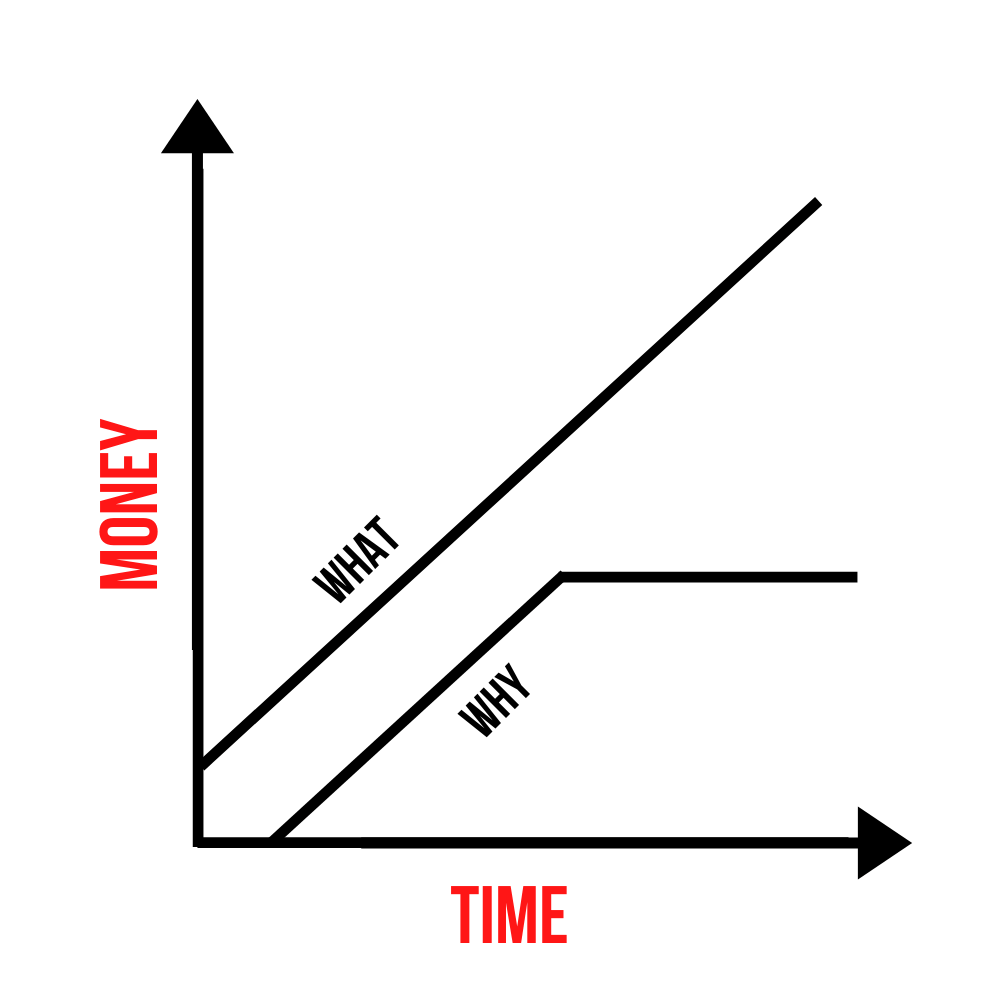
For all organisations that go through a split, are no longer inspired by a greater cause. They simply come to work, manage systems and work to reach certain preset goals. What the organisation does and its why should always be parallel to be successful, to achieve that state of being.
What gets measured gets done, find a way to measure your why.
Just because someone makes a lot of money does not mean that he necessarily provides a lot of value. Likewise, just because somebody makes little money does not necessarily mean he provides only a little value. Simply measuring the number of goods sold or the money brought in is no indication of value. Value is a feeling, not a calculation, it’s perception.
🔗Good successions keep the why alive.
Any effective movement, social or business needs a leader to march in the front, preaching the vision and reminding people why they showed up in the first place. When the person who personifies the WHY departs without clearly articulating why the company was founded in the first place, they leave no clear cause for their successor to lead. The new leader will Focus attention on the growth of WHAT with little attention to WHY.
The only succession plan that will work is to find a CEO who believes in and wants to continue to lead that movement, not replace it with their own vision of the future. It is easy to know if a successor is carrying the right torch. Simply apply the Celery Test and see if what the company is saying and doing makes sense.
Money is never a cause but a result. Finding WHY is a process of discovery, not invention. The WHY for every other individual or organisation comes from the past. An organisation, don’t forget, is one of the WHATS, one of the tangible things a founder or group of founders has done in their lives to prove their WHY. When you compete against everyone else, no one wants to help you, But when you compete against yourself everyone wants to help you. find your WHY pursue it and communicate to the world through actions and decisions that support it.
 Tkc Notes